Bhutan, the country that measures happiness.
A Buddhist kingdom in the Himalaya, with cliffside monasteries and forest-covered valleys, that welcomes only a few travelers each year.
- Paro
- Thimphu
- Punakha
There is a country that measures happiness. And it wrote it into its Constitution.
The last Buddhist kingdom of the Himalaya
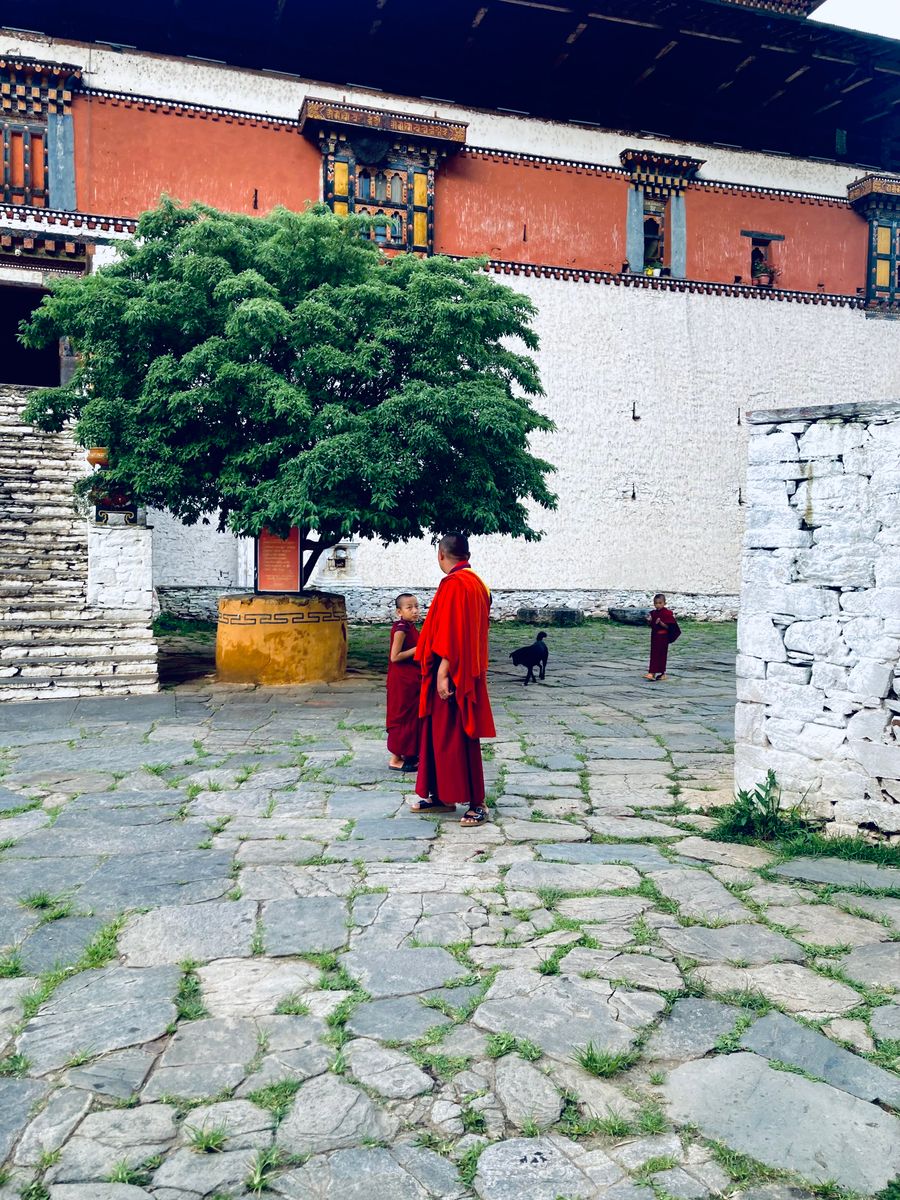
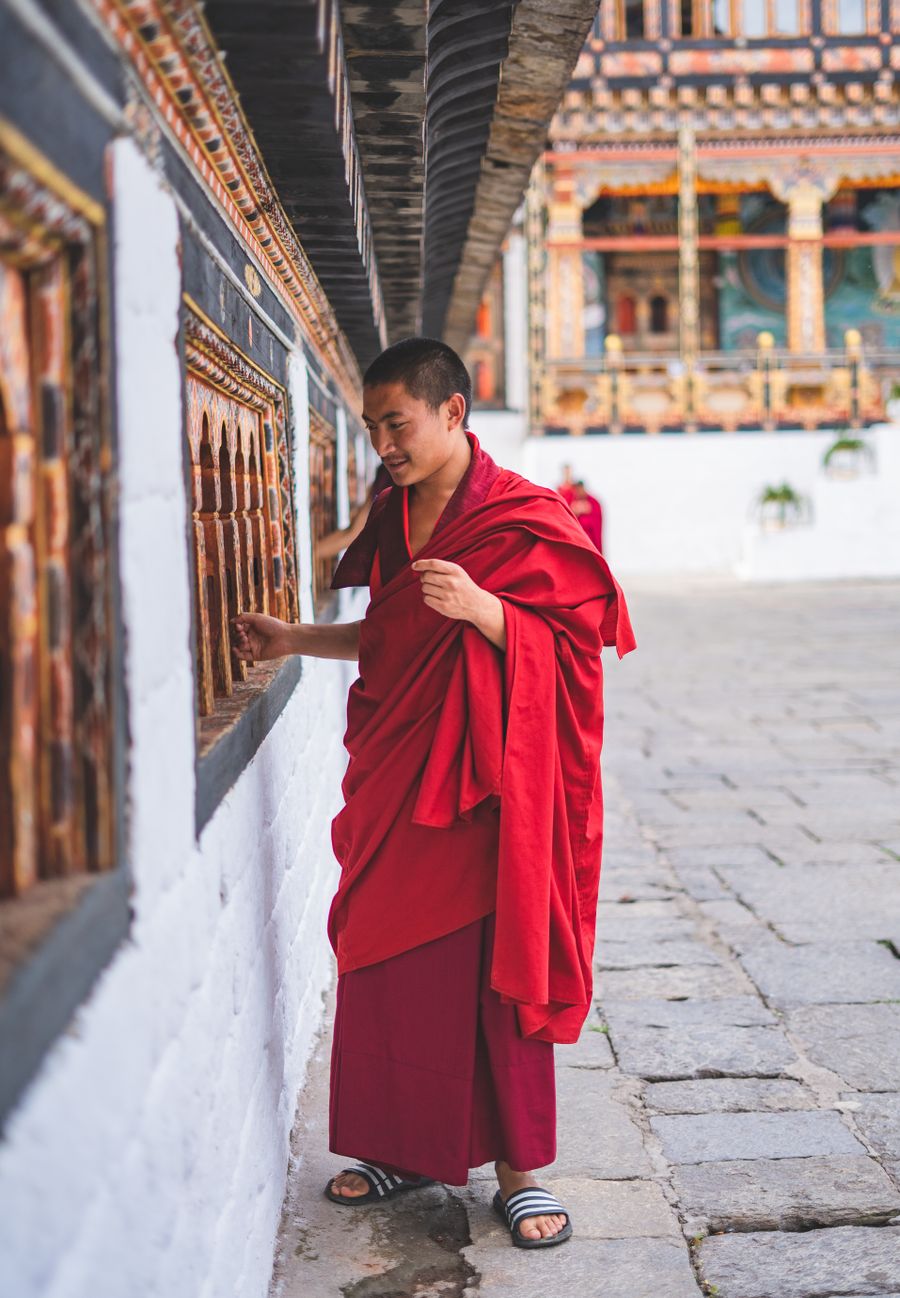
Bhutan has protected its culture by choosing to welcome few travelers. The fortress-monasteries are still the center of religious life and government, monks share the streets with people heading to work in traditional dress, and the prayer wheels turn all day long.
It's a journey to slow down: walking through the valleys, climbing up to the monasteries, and seeing up close how people live when they've placed happiness at the center of their choices.
More important than GDP
In the early 1970s, Bhutan's fourth king, Jigme Singye Wangchuck, told a foreign newspaper that Gross National Happiness mattered more than GDP. He was 17 years old.
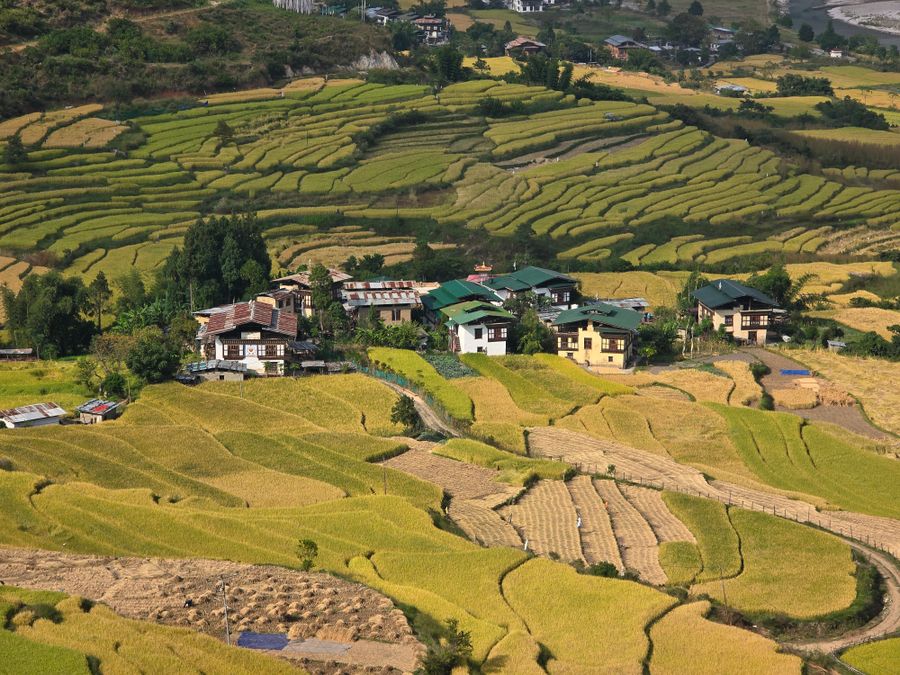
The idea became state policy: the 2008 Constitution directs the government to create the conditions for people to pursue happiness. More than 70% of the country is forest, and Bhutan is one of the few countries in the world that absorbs more carbon than it emits.
From the valleys of Paro to the Tiger's Nest
You'll receive the day-by-day itinerary, with hotels and group dates, in our WhatsApp conversation.
A landing among the mountains
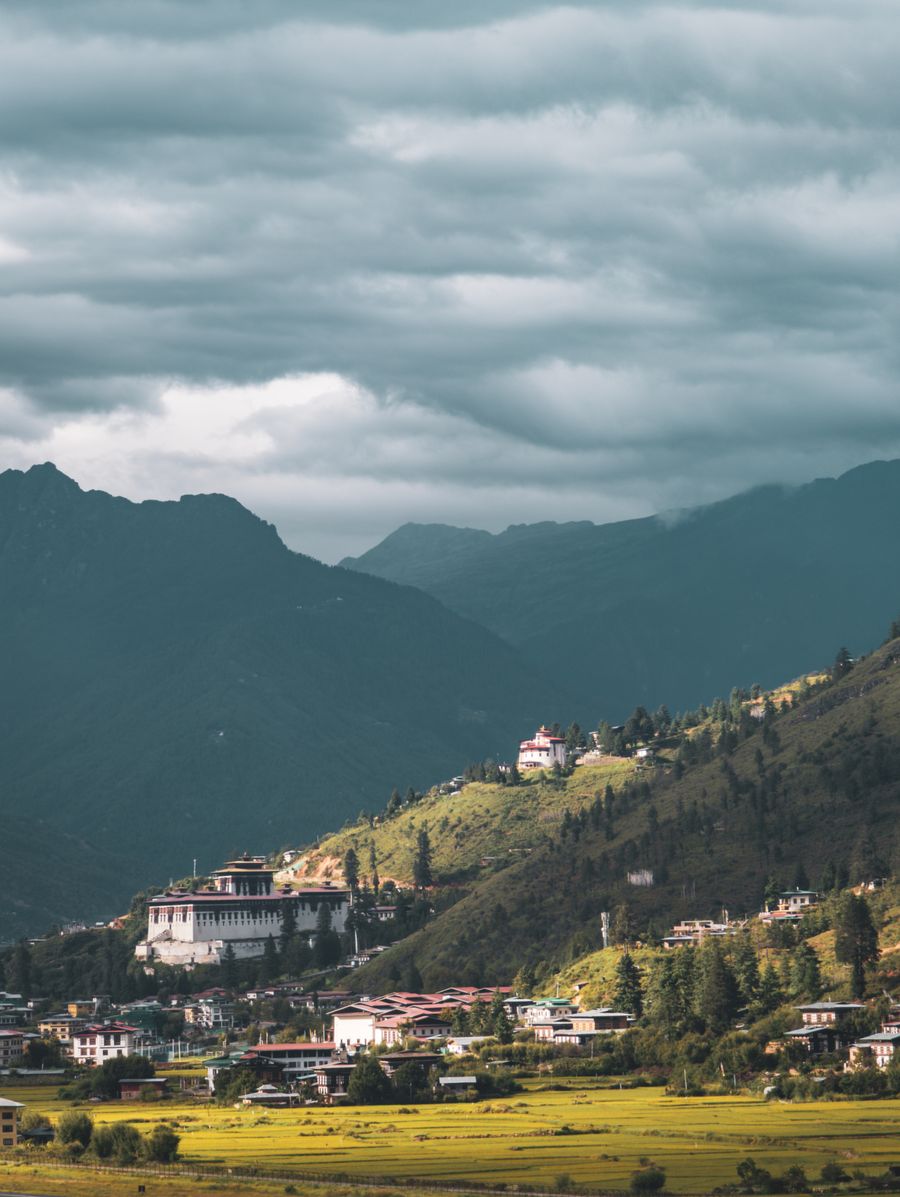
Arriving in Bhutan is an experience in itself: the plane descends between the mountains into the Paro valley, on one of the most spectacular landings in the world. There, we begin slowly, at the valley's pace.
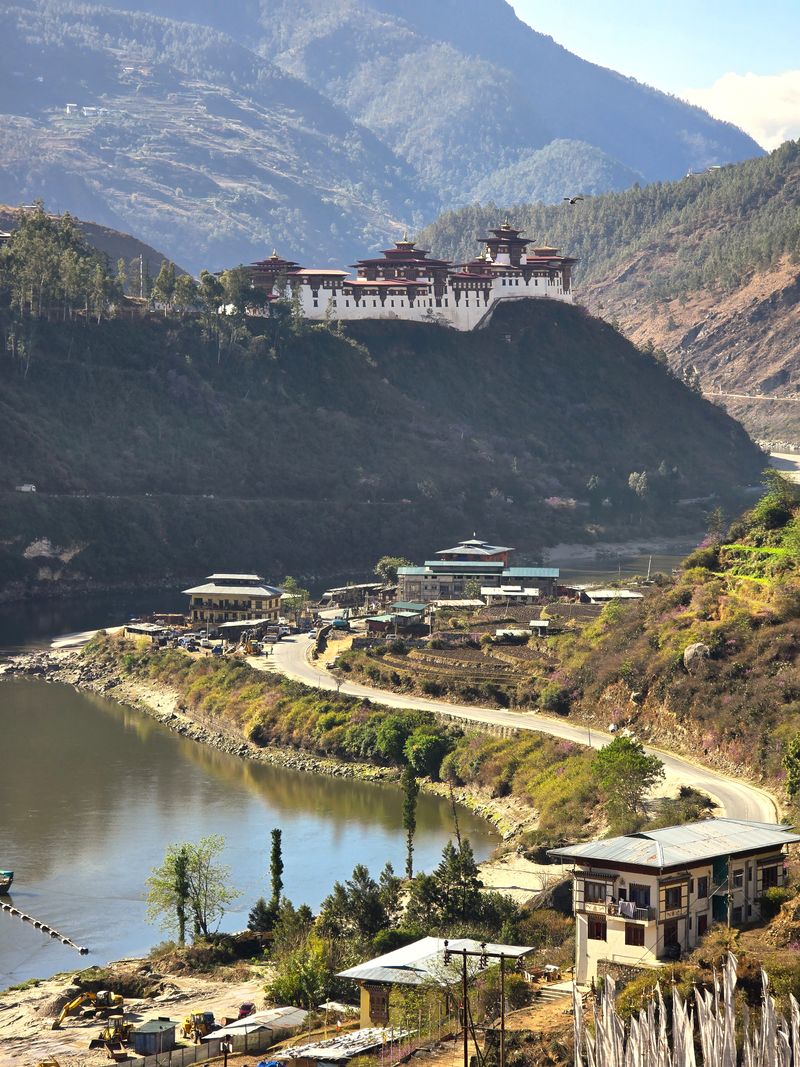
- Rinpung Dzong, the fortress-monastery above the Paro River
- Kyichu Lhakhang, one of the oldest temples in Bhutan
- The bridges draped in prayer flags

The capital without traffic lights
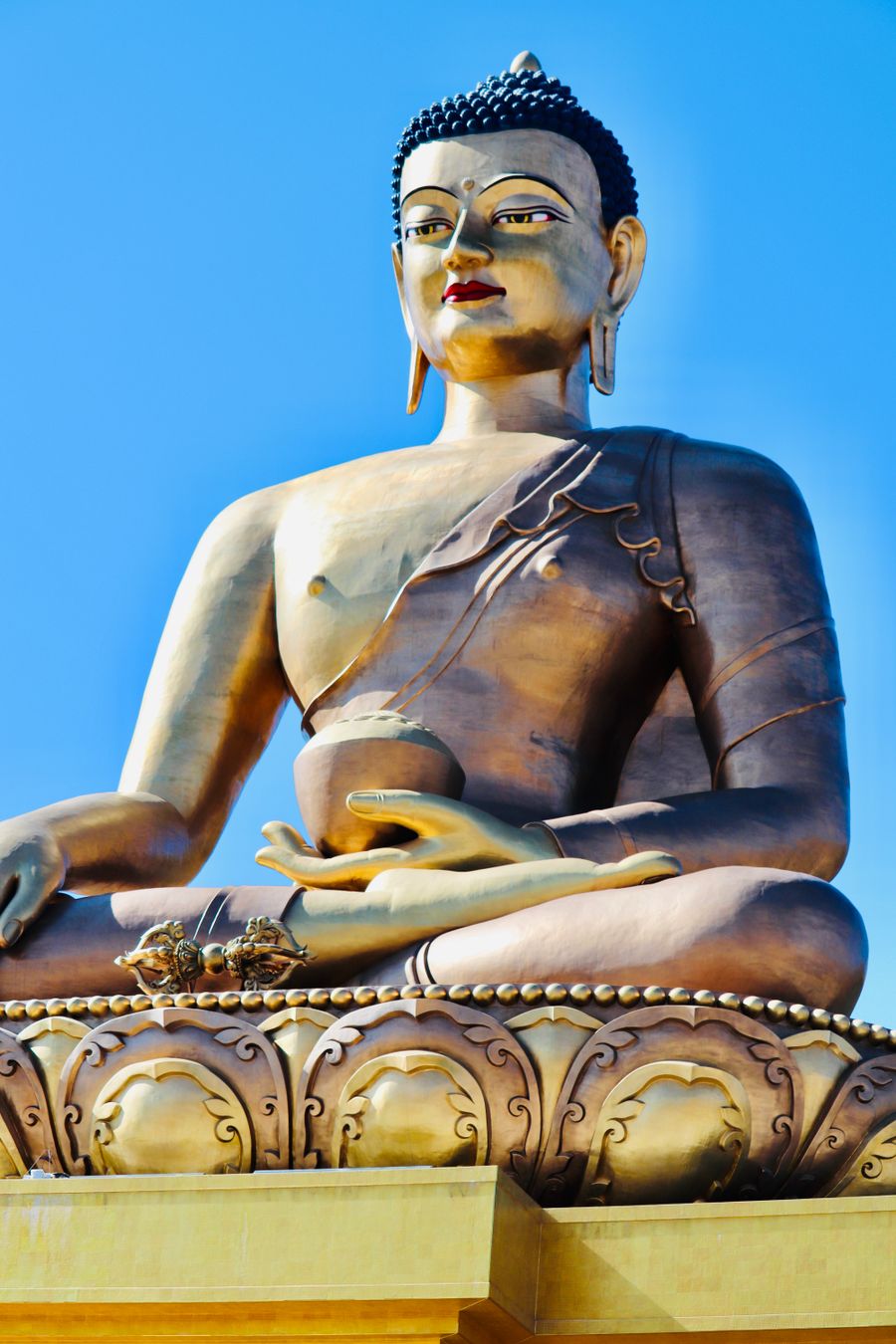
Thimphu is one of the few capitals in the world without a single traffic light: traffic is directed by officers whose gestures look like a dance. From the top of the hill, a golden Buddha watches over the city.
- Buddha Dordenma, one of the largest seated Buddhas in the world
- The Memorial Chorten, where the elders walk while turning prayer wheels
- Tashichho Dzong, seat of the government and the clergy
The 108 chortens and the palace between two rivers
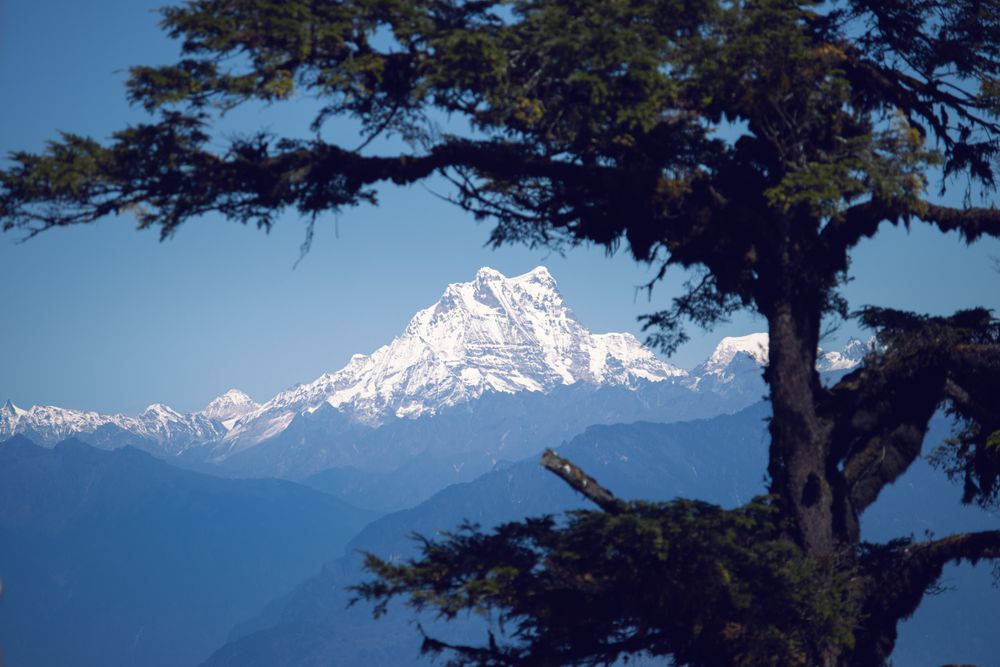
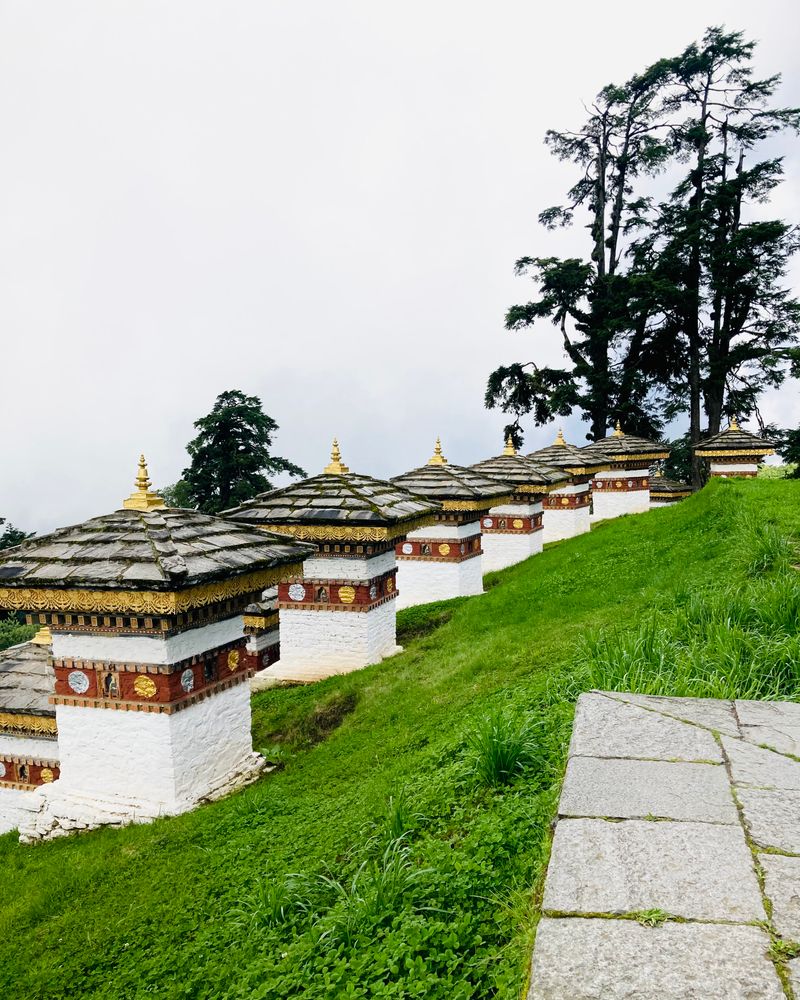
The road climbs to the Dochula Pass, where 108 chortens are scattered across the hillside and, on clear days, the Himalaya appears on the horizon. Then we descend into the Punakha valley, warmer and full of rice paddies.
- Dochula Pass and its 108 chortens
- Punakha Dzong, at the meeting of the Pho Chhu and Mo Chhu rivers
- The Punakha suspension bridge, high above the river

The monastery hanging from the cliff
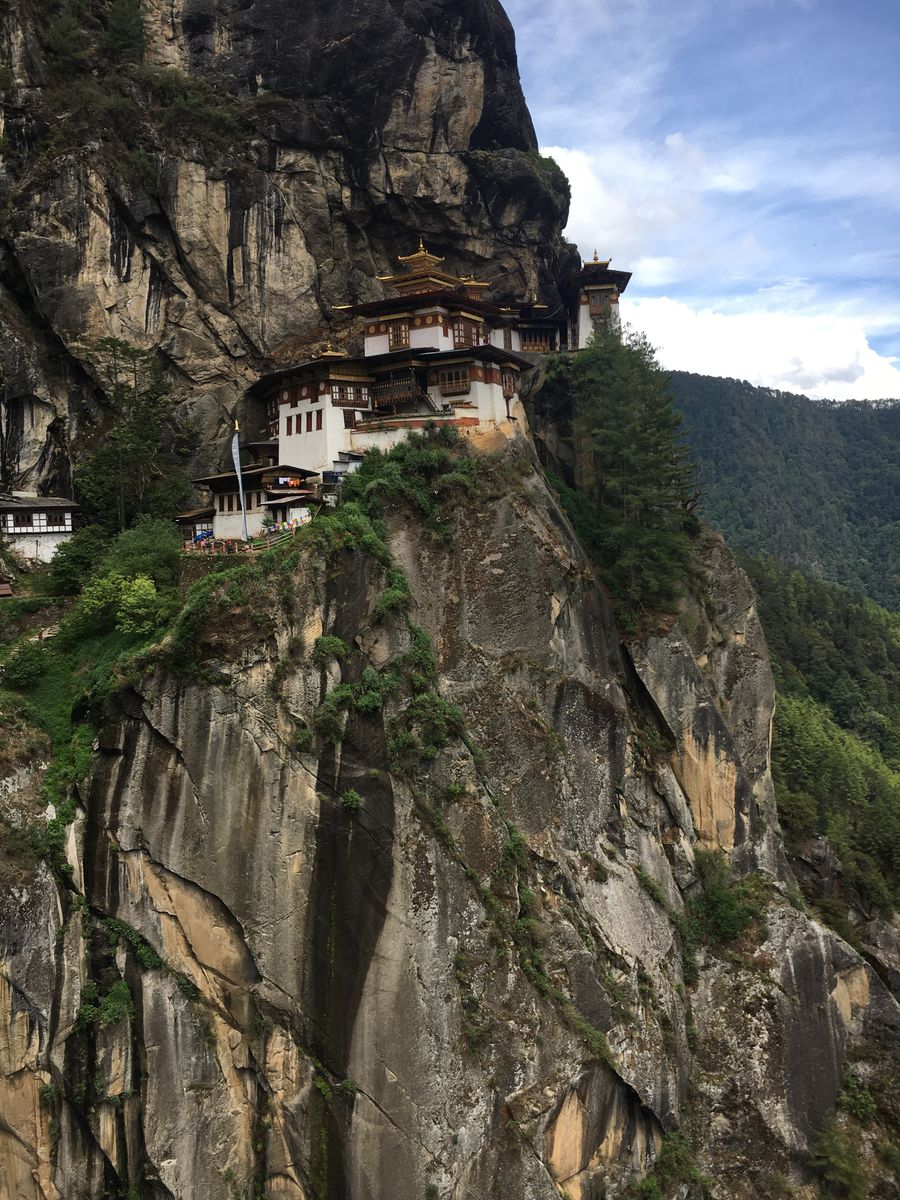
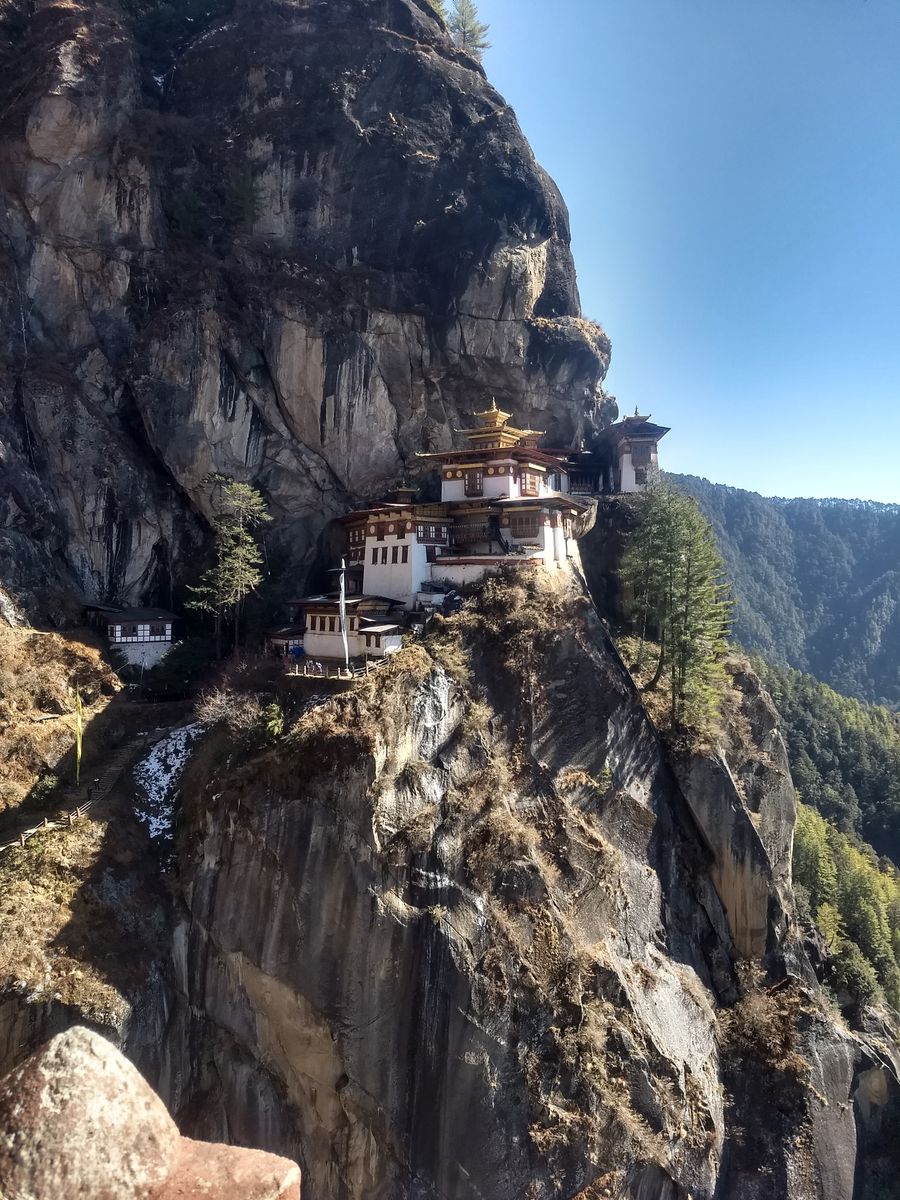
The hike up to the Tiger's Nest is the high point of the journey. The monastery began as the meditation cave of Guru Rinpoche, who brought Buddhism to Bhutan, and the temple you see today was built between 1692 and 1694, some 3,000 feet above the valley floor.
- A trail of a few hours through the forest, at your own pace
- Horses available for the first half of the way
- A pause at the lookout, facing the monastery
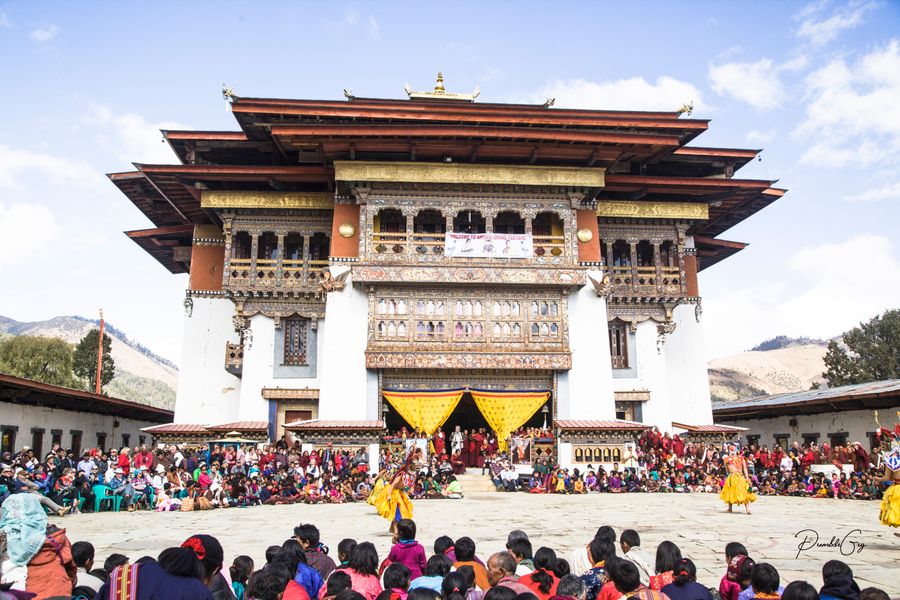
Monks dancing in masks
At the tsechu festivals, the cham dances tell the teachings of the Buddha, with masks and silk robes unchanged for centuries. For the Bhutanese, simply watching brings a blessing. When the dates allow, the group travels during one of these festivals.

Everything taken care of, so you can simply live it
- Hand-picked hotels, with breakfast
- Private transportation and a licensed Bhutanese guide throughout the trip
- Admission to the dzongs, temples and monasteries on the program
- Bhutan visa, issued before the trip by the local host agency
- Full support with preparation: flights, insurance, vaccines and currency
- Arjun by your side from start to finish
Bhutan can also be the continuation of a journey through India and Nepal. In our conversation, I'll walk you through the ways to combine these destinations.
Before you leave for Bhutan
How does the visa work?
Bhutan only welcomes travelers on itineraries arranged by a licensed local agency, which also issues the visa before departure. We take care of the entire process for you.
How do you get to Bhutan?
By plane, into Paro airport. Flights depart from cities like Kathmandu and Delhi, which is why Bhutan pairs so well with a trip to Nepal or India.
Is the hike to the Tiger's Nest difficult?
It's a hike of a few hours, with a steady climb, done at your own pace. Horses are available for the first half of the way, and anyone who prefers can stay at the lookout, where the view of the monastery is already beautiful.
When is the best time to go?
Spring and fall, with clearer skies and pleasant temperatures. These are also the seasons of the great tsechu festivals, like those in Paro and Thimphu.
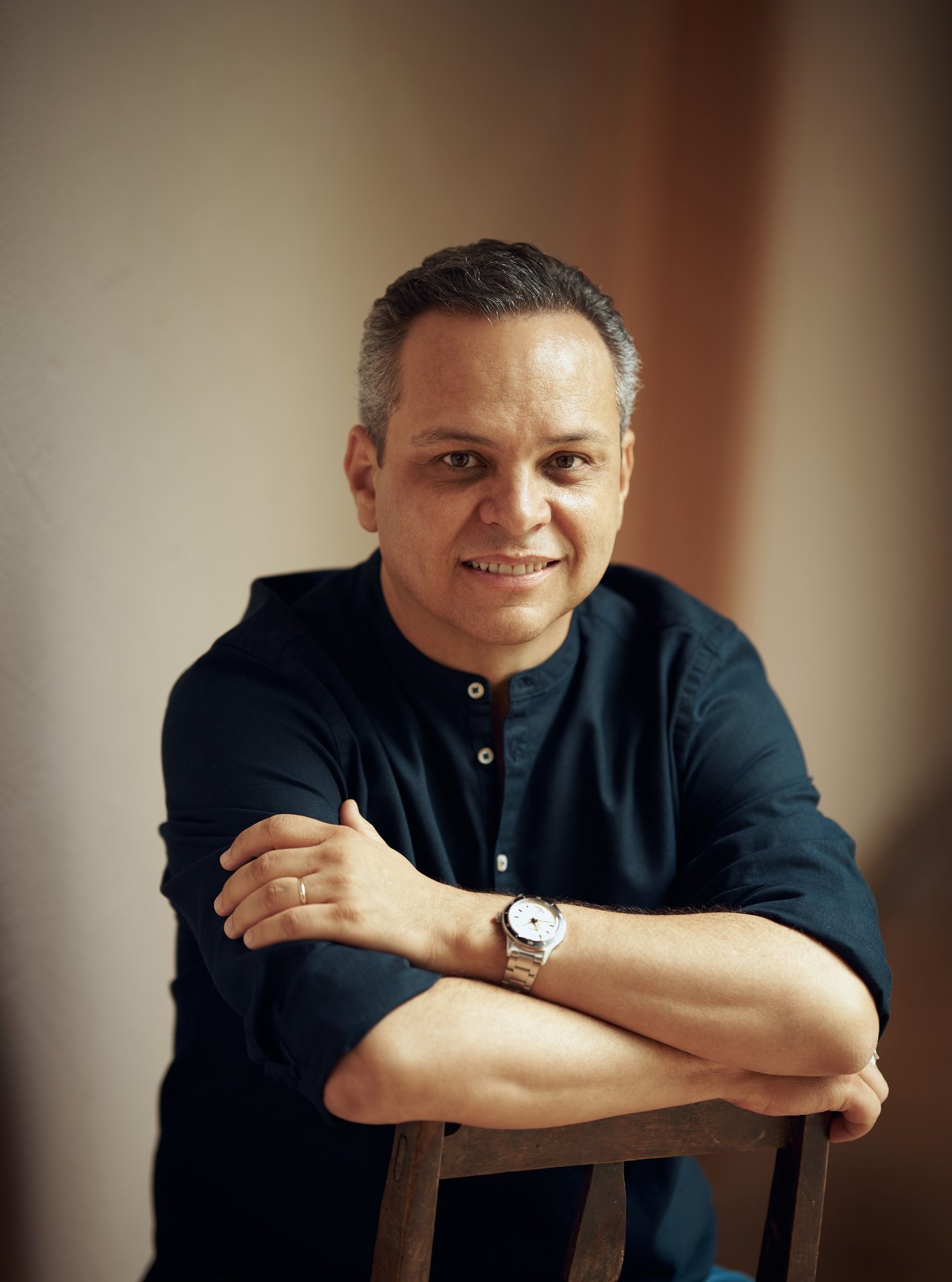
A travel companion who has been there and back
What moves me is what unites humanity. In Bhutan, you see it in an entire people who decided to measure their wealth by happiness, in the elders who walk while turning prayer wheels, and in the monks who dance to bless those who watch.
Those are the encounters I take you to, with time, respect and attention, so the journey also becomes a question about what makes life worth living.
Bhutan is one of six journeys. India, Nepal, China, Peru and Egypt are waiting too.
See all destinationsThe land of happiness is waiting for you.
Small group, limited spots. Book your conversation and receive the full itinerary.
Talk to Sagrado Tourism
-
Phone+55 31 99629-8418
-
WhatsApp+55 31 99629-8418
-
Email[email protected]
-
OfficeSão Paulo · Brazil
Personal service, with a reply within one business day. Everything you share with us is handled with complete discretion.
Sagrado Tourism · Prof. Arjun · @arjun.life